Spain Unveils Auto+ EV Incentive: Up to €4,500 for EV Buyers in 2026
The government has approved the Auto+ Programme, a €400 million EV incentive framework offering up to €4,500 in purchase support for eligible electric and electrified vehicles. Effective retroactively from 1 January 2026, the scheme provides immediate market clarity after years of fragmented rollout.
Crucially, Auto+ is not structured as a standalone subsidy.
Positioned within the broader Plan Auto 2030, it integrates consumer demand stimulation with industrial reinforcement, aiming to consolidate Spain’s role within Europe’s automotive value chain.
As Spain works to close the gap with Europe’s leading EV markets, Auto+ represents a more coordinated, long-term approach: supporting demand, strengthening supply chains, and anchoring electric mobility within a national industrial strategy.

Why Auto+ Matters Now
Spain’s EV market has progressed steadily in recent years, supported by public charging expansion and earlier incentive schemes. Like many European markets, however, sustained growth relies on consistent policy signals and administrative clarity.
Auto+ addresses that need.
The programme provides:
- Up to €4,500 in purchase aid
- €400 million confirmed budget for 2026
- Retroactive eligibility from 1 January 2026
- Higher incentives for pure electric vehicles (BEVs)
- Preference for vehicles manufactured within the European Union
The retroactive structure is particularly significant. By providing certainty for purchases already made this year, it stabilises the sales cycle and supports continued adoption without disruption.
And with affordability improving and model availability expanding, Auto+ reinforces Spain’s shift toward mainstream electrification.
From Demand Stimulus to Industrial Strategy
Auto+ is not simply a successor to MOVES. It reflects the evolution of EV policy across Europe, where incentives are now tools for long-term industrial and supply chain resilience, not just short-term climate goals.
By linking support to EU-manufactured vehicles, Spain is:
- Strengthening domestic and regional supply chains
- Supporting European OEM competitiveness
- Aligning with EU battery and platform localisation strategies
As global competition intensifies, this alignment between decarbonisation and industrial development becomes strategically important and demonstrates Spain’s intent to participate actively in Europe’s next chapter of automotive transformation.
What Auto+ Changes for Buyers
For private consumers, €4,500 meaningfully improves affordability in compact and mid-range segments, narrowing the price gap with combustion vehicles, easing financing, and enhancing total cost of ownership calculations.
Combined with falling battery costs and increased competition across models, Auto+ reinforces the growing reality that EVs are becoming a default consideration rather than a niche alternative.
For many first-time EV buyers, policy predictability is just as important as the incentive amount itself.
A Catalyst for Fleet Electrification
Fleet electrification remains one of the most powerful levers for transport decarbonisation, and Spain has significant opportunity in this segment.
Across Europe, corporate fleets account for roughly 60% of new car registrations, giving them outsized influence on both emissions and secondary vehicle markets (Transport & Environment, 2025).
With predictable duty cycles, centralised procurement, and ESG reporting incentives, electrification is operationally viable and strategically necessary (IEA’s Global EV Outlook 2025).
By lowering upfront capital expenditure, Auto+ improves fleet TCO modelling, procurement timing, and electrification pacing. Given the scale of high-mileage commercial vehicles operating in Spain, even minor improvements in fleet economics can drive substantial emissions reductions and charging infrastructure investment.
The Infrastructure Opportunity: Scaling in Parallel
While purchase incentives stimulate demand, infrastructure ensures that demand can translate into sustained, long-term adoption.
Spain has made meaningful progress in expanding public charging networks and supporting residential installations. As Auto+ accelerates vehicle uptake, attention naturally shifts toward:
- Reliable home and workplace charging
- Multi-vehicle load-managed installations
- Depot electrification for logistics fleets
- Integration with renewables and battery storage
- Smart, grid-aware energy management
Encouragingly, Spain’s growing ecosystem of charging providers, installers, and energy innovators is well positioned to support this next phase.
Auto+ therefore serves not only as a vehicle incentive, but a catalyst for deeper infrastructure maturity across the country.
Auto+ vs MOVES: A Strategic Evolution
While MOVES successfully stimulated demand and expanded early adoption, Auto+ adds a clearer national and industrial dimension under Plan Auto 2030.
- Integrated within a long-term national strategy
- Aligned with EU manufacturing priorities
- Retroactive to stabilise the 2026 sales cycle
- Tightly linking electrification with industrial competitiveness
This reflects a broader European recalibration in which EV policy is increasingly designed to balance decarbonisation, affordability, and economic resilience.
What Happens Next?
Detailed eligibility criteria and approved vehicle lists will determine the full impact of Auto+ in the months ahead.
Buyers and fleet managers considering EV purchases in 2026 should:
- Confirm vehicle eligibility early
- Factor retroactive incentives into financing models
- Assess charging readiness at home, workplace, or depot
- Monitor programme budget allocations
Efficient execution will determine Auto+’s impact. With continued charging expansion and streamlined processes, 2026 could mark a turning point for Spain’s electrification.
A Defining Phase for Electric Mobility in Spain
Auto+ sends a strong signal that electric mobility is firmly embedded in Spain’s long-term transport and industrial agenda.
By aligning affordability, manufacturing, and infrastructure development, the programme creates a more cohesive framework for sustained EV adoption. If matched by continued charging expansion and efficient implementation, 2026 could accelerate Spain’s electrification trajectory significantly.
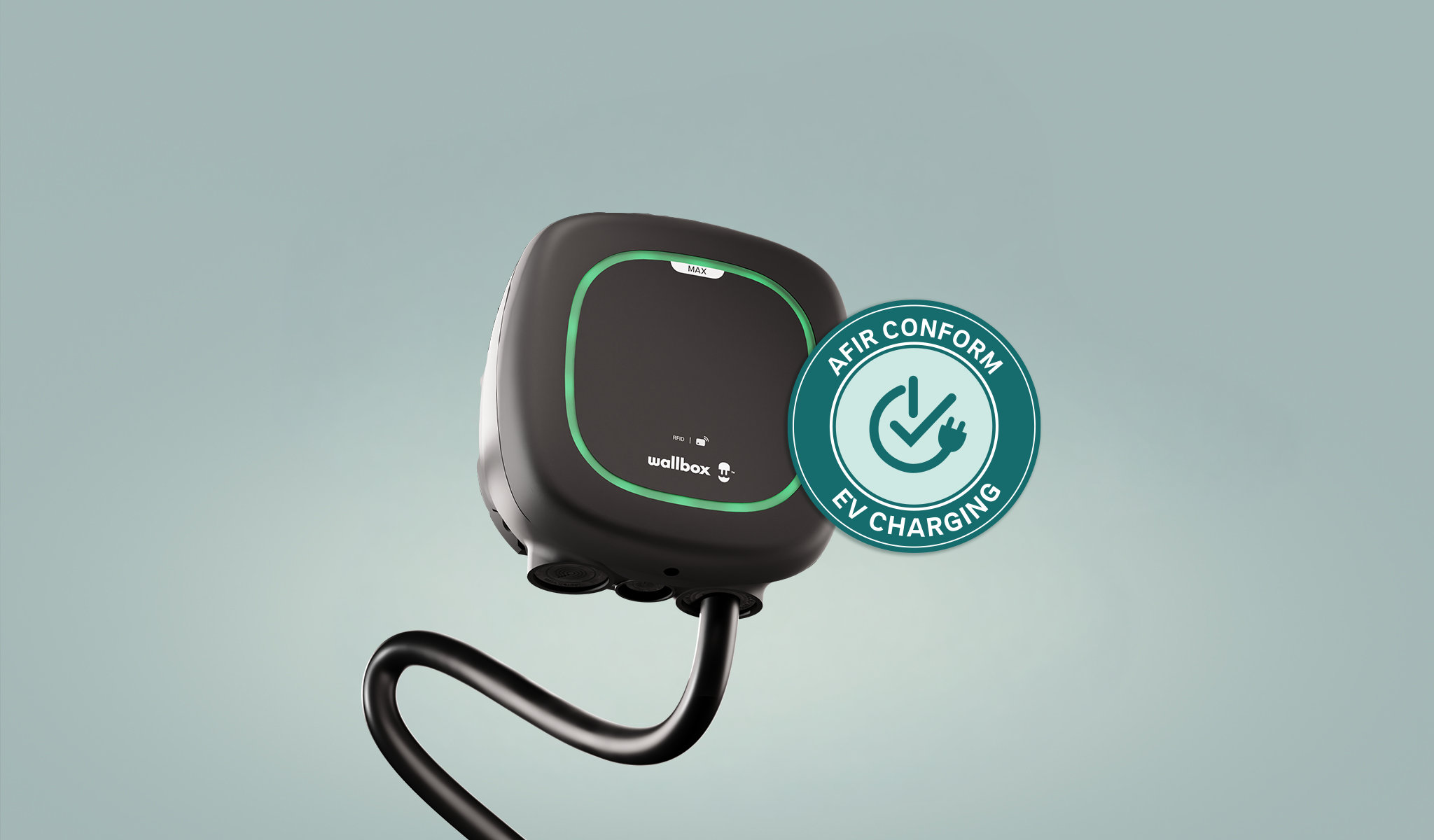
AFIR 2027 and ISO 15118: What Businesses and Installers Need to Know About EV Charging

Charge Smarter, Spend Less: How Advanced Dynamic Load Management Can Cut Your Energy Costs